Date: 21-Jan-2026
Location: Project villages
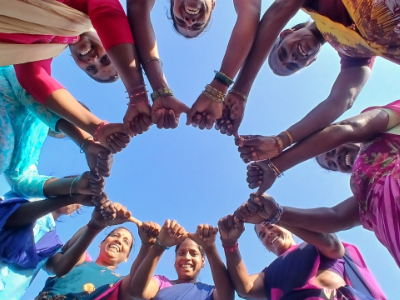
The Women’s Unity and Happiness – Caste Neutral Programme was successfully conducted on 21 January 2026 across 15 project villages under the SARVAM initiative, with the support of Bandhan Bank. The programme reached nearly 500 women from diverse communities and was designed to strengthen unity, promote caste neutrality, and enhance physical, mental, and emotional well-being. It created a safe, joyful, and inclusive space where women could connect freely, express themselves openly, and cultivate happiness and gratitude in everyday life.
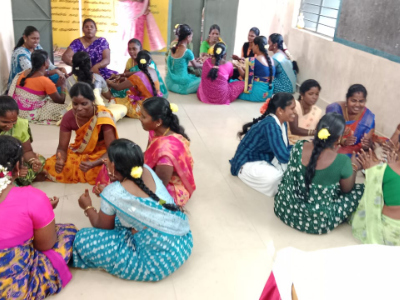
The programme commenced with an engaging ice-breaker activity titled “Who Am I?”, where participants introduced themselves by sharing their names, a positive personal quality, and their intention to remain happy during the session. This activity helped reduce hesitation, build confidence, and establish a warm and friendly atmosphere. It was followed by unity-building exercises such as the rope activity and a reflective session titled “We Are All Human Beings”, which enabled participants to experience cooperation and recognise that emotions such as pain, love, and joy transcend caste, religion, and economic differences.
Physical well-being was addressed through simple, locally appropriate exercises including stretching, breathing practices, and gentle movements suitable for women of all age groups. Emphasis was placed on the importance of regular physical activity, reinforcing the idea that the body is one’s home and must be cared for with awareness and respect. Participants performed these exercises collectively, fostering both enjoyment and health consciousness.
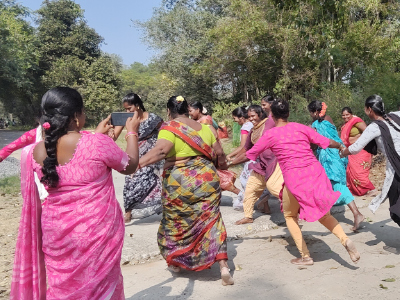
Mental and emotional well-being were explored through small group discussions, where women shared sources of stress as well as moments of happiness in their lives. These conversations highlighted the importance of emotional expression and mutual support, helping participants realise that sharing feelings lightens emotional burdens. A gratitude session encouraged women to reflect on and appreciate positive aspects of their lives such as health, family, work, and relationships, shifting focus from worries to thankfulness.
The programme concluded with happiness-building activities including a laughter chain and a personal commitment exercise, where each participant pledged to adopt one positive habit in daily life. The session ended with collective affirmations, applause, and a group photograph. Overall, the programme proved meaningful and impactful, leaving participants feeling united, confident, relaxed, and motivated to support one another while leading happier and more harmonious lives.